


What is the JS4000 Concrete Mixer?
JS4000 is a large, compulsory, twin-shaft concrete mixer that plays a key role in major construction projects.
- JS: A Chinese pinyin abbreviation that stands for “twin-shaft compulsory mixer.”
- 4000: Indicates its discharge capacity of 4000 liters, which means that each batch can theoretically produce 4 cubic meters (m³) of ready-mixed concrete.
Note:
Simply put, JS4000 is a large concrete mixer capable of producing 4 cubic meters of concrete per batch.
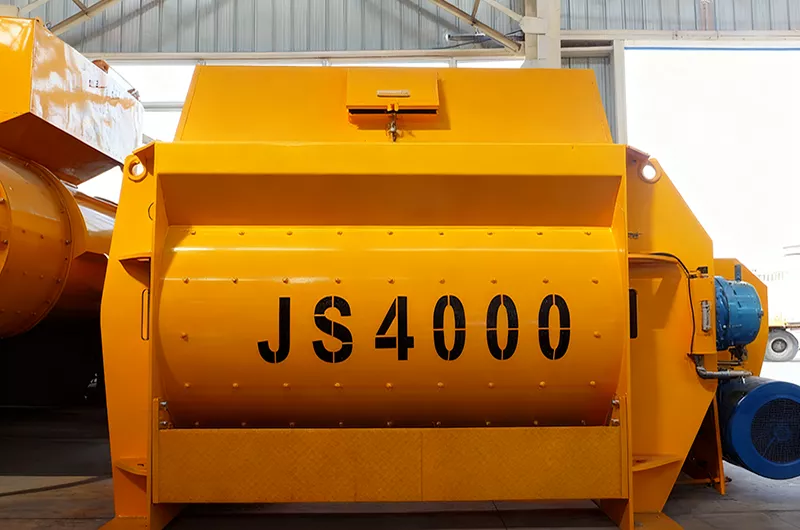
JS4000 Concrete Mixer Specifications
| Specification | Unit | Value |
| Discharging Volume | L | 4000 |
| Charging Volume | L | 6400 |
| Mixer Capacity | m3 | 4.0 |
| Lubrication System | Brand | Choosed |
| Reducer | Brand | Choosed |
| Aggregate Size | mm | 60/80 |
| Aggregate Compartments | Quantity | 4 |
| Working Circle | S | 60S |
| Mixer Motor Power | KW | 2x75 |
| Mixing Speed | r/min | 31.5 |
| Mixing Blade | Quantity | 2x9 |
| Lifting Motor Power | KW | 28 |
| Pump Motor Power | KW | 3 |
| Weight | KG | 13000 |
| Dimensions | mm | 3970x2850x2140 |
JS4000 Concrete Mixer Features
- Forced Mixing: Using mixing blades fixed on two parallel shafts to apply strong shearing, squeezing, and overturning forces to the materials, resulting in powerful mixing action.
- High Mixing Efficiency and Excellent Quality: Particularly suitable for mixing dry-hard, semi-dry-hard concrete and lightweight aggregate concrete; offers high mixing uniformity and stable concrete quality.
- Twin-Shaft Design: Provides a large mixing range with no dead zones, and offers faster mixing speed compared to single-shaft mixers.
- Robust Structure: To withstand enormous mixing torque and impact loads, the frame, mixing drum, shafts, and blades are all heavy-duty and made from high-quality steel.
- Automated Control: Typically used with PLD series concrete batching machines and a fully automatic computer control system to form an HZS200 concrete batching plant, enabling automated production.
JS4000 Concrete Mixer Applications
The JS4000 belongs to large-scale engineering equipment and is mainly used for:
- Large Water Conservancy and Hydropower Projects: Such as dams and reservoir construction.
- Ready-Mix Concrete Plants: Serving as the core host of HZS200 plants to supply ready-mixed concrete for urban construction.
- Highway and Railway Construction: Such as expressways and high-speed rail projects.
- Ports, Terminals, Bridges, and Other Large Infrastructure.
- Precast Component Factories: Producing large precast concrete components.
Why Choose JS4000?
Outstanding Mixing Performance
- Mixing Quality: Capable of mixing dry-hard, plastic, fluid, lightweight aggregate concrete and various mortars.
- Mixing Uniformity: The double-spiral continuous blade design improves mixing uniformity by 15% compared to traditional shovel-type blades.
- Mixing Efficiency: With a mixing cycle of just 60 seconds, it can produce 200–240 cubic meters of concrete per hour.
Economy and Reliability
- Low Energy Consumption: The compact transmission system saves 10–15% energy compared to similar products.
- Low Noise: The optimized transmission device keeps noise at industry-leading levels, improving the working environment.
- Easy Maintenance: The structure is designed for convenient inspection; key components are easy to replace, reducing maintenance costs.
- Long Service Life: Key components are made of high-quality materials, ensuring a service life of over 10 years and a short return-on-investment period.
JS4000 Concrete Mixer Working Process
In a complete concrete batching plant, the JS4000 working process is as follows:
- Batching: The PLD batching machine weighs sand, gravel, cement, fly ash, and other aggregates and powders according to the mix ratio.
- Lifting/Conveying: The weighed aggregates are transported via belt conveyor or skip hopper to the aggregate hopper above the mixer. Powders and water are added through screw conveyors and pumps.
- Mixing: All materials enter the JS4000 mixing drum; the motor drives the two shafts to rotate in opposite directions, enabling strong mixing through the blades.
- Discharging: After mixing is complete, the pneumatic or hydraulic discharge gate opens to unload the mixed concrete into the waiting concrete mixer truck.
- Cycle: The discharge gate closes and the next mixing cycle begins.
JS4000 Concrete Mixer Advantages
- High Output: Meets the huge concrete demand of large-scale engineering projects.
- Stable Quality: Forced mixing ensures uniformity and high-strength concrete.
- High Reliability: Heavy-duty design with low failure rate; suitable for harsh working conditions.
- High Degree of Automation: Easily integrated into automated batching plants, reducing manual intervention.
JS4000 Concrete Mixer Components
| Component | Image | Description |
| Mixing System |
|
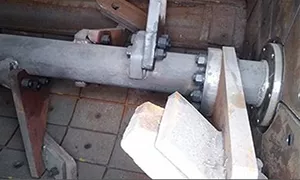
The JS4000 mixing system is made of high-alloy wear-resistant materials, ensuring stable mixing and uniform blending; the multi-layer shaft-end sealing technology effectively prevents slurry leakage, improving production efficiency and extending service life. |
| Unloading System |
|
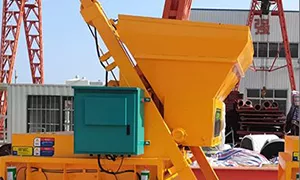
The discharging system offers hydraulic, pneumatic, and manual control options; the mechanism is driven by cylinders to achieve fast, stable, and reliable discharge operations. |
| Water Supply System |
|
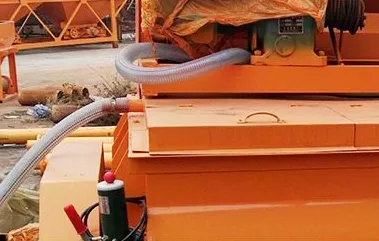
The water supply system consists of a motor, pump, throttle valve, cleaning device, and spray pipe; water is delivered through the pump and throttle valve to the spray pipe, and the valve adjusts the water flow to ensure proper concrete consistency. |
| Lubricating oil pump |
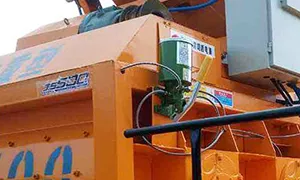
|
The grease pump is equipped with a grease filtering inlet to prevent impurities from entering and affecting the sealing performance, thereby enhancing equipment precision and extending service life. |
| Electrical System |
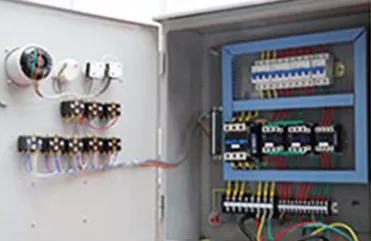
|
The electrical system features short-circuit and overload protection, uses insulated panel design, and ensures safe, reliable operation with convenient daily use and maintenance. |
| Gear Motor |
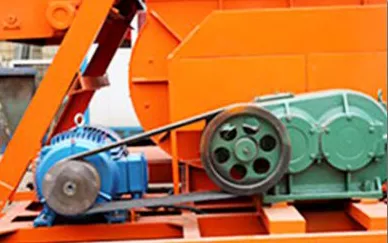
|
The gear motor reduces output speed while increasing torque; by coordinating motor output with the reduction ratio, it effectively reduces load inertia and ensures smoother, more efficient operation. |
JS4000 vs Other Mixer Models
| Model | Discharge Capacity | Theoretical Productivity | Application Scenarios | Compared to JS4000 |
| JS3000 | 3m³ | 150–180m³/h | Medium-sized projects, small to medium batching plants | 25% lower capacity, suitable for smaller-scale projects |
| JS4000 | 4m³ | 200–240m³/h | Large-scale projects, large batching plants | Mainstream large model with best cost-performance ratio |
| JS5000 | 5m³ | 250–300m³/h | Extra-large projects, large batching plants | 20% higher capacity but more expensive and higher energy consumption |
| JS2000 | 2m³ | 100m³/h | Small batching plants, general construction projects | Only half the capacity of JS4000, suited for small-scale needs |
The JS4000 achieves the best balance among capacity, energy consumption, and price, making it an ideal choice for large-scale projects and medium-sized batching plants. It avoids the insufficient capacity of the JS3000 and the high investment burden of the JS5000.
With its 4-cubic-meter capacity, over 200m³/h output, and twin-shaft compulsory mixing technology, the JS4000 concrete mixer has become a core device in modern large-scale construction and batching plants. It not only provides excellent mixing quality and accommodates various mix designs, but also offers low energy consumption, low noise, easy maintenance, and outstanding long-term economic performance.
JS4000 Concrete Mixer Supporting Solutions
As the main host, the JS4000 is typically paired with a series of supporting products to form a complete system (usually an HZS200 batching plant) for efficient operation.
A complete JS4000 batching plant (i.e., HZS200 plant) includes the following core components:
| System Category | Core Supporting Products |
| Main Host | JS4000 Twin-Shaft Mixer |
| Aggregate System | PLD6400 Concrete Batching Machine + Belt Conveyor |
| Powder System | Two or Three 150T/200T Cement Silos + Corresponding Screw Conveyors |
| Liquid System | Water scale, additive scale, supporting tanks, pumps, and valves |
| Control System | Fully Automatic Computer Control System (including PLC, industrial computer, and software) |
| Power System | Air Compressor and Pneumatic Components |
| Structural Components | Main station steel structure, walkways, stairs |
| Environmental Options | Main tower enclosure, sand & gravel recycling system, centralized dust collector |
JS4000 Concrete Mixer Notes / Drawbacks
- High Investment Cost: Equipment and supporting batching plant require significant investment.
- High Energy Consumption: Two high-power motors operate simultaneously, consuming large amounts of electricity.
- Large Footprint: Requires a solid concrete foundation and a large installation site.
- Professional Maintenance: Needs a professional maintenance team and sufficient spare parts.
The JS4000 concrete mixer is a typical representative of large, efficient, forced-type mixing equipment. With its strong production capacity and reliable mixing quality, it provides essential support for modern large-scale infrastructure construction.